


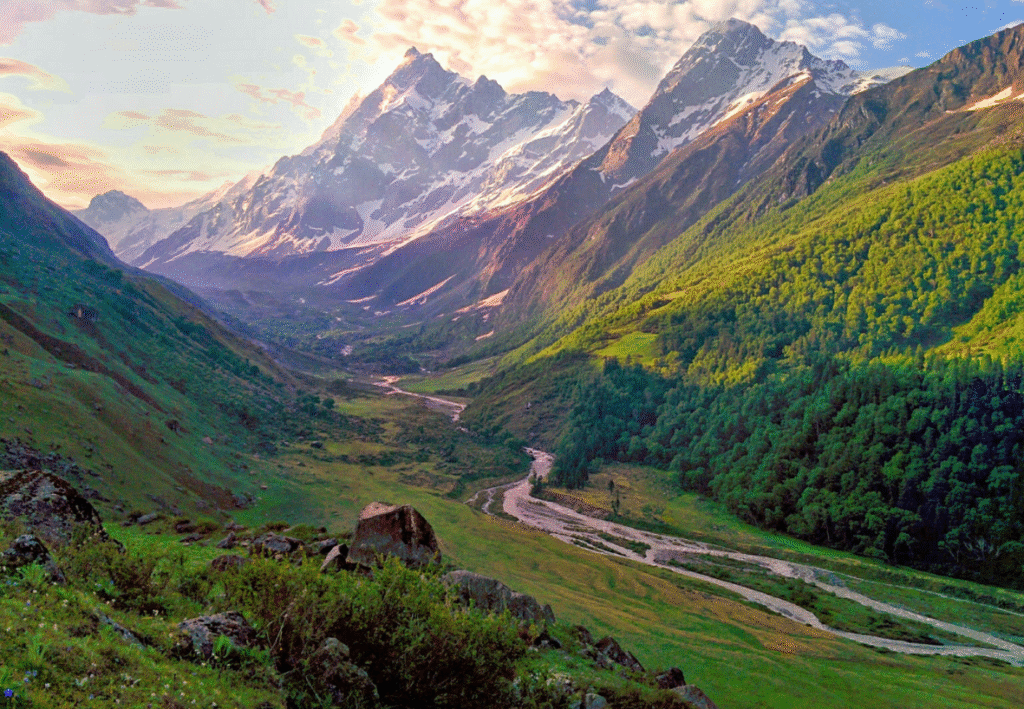
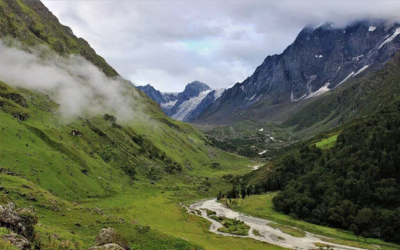
A trekker’s delight, the Har ki Dun trek is the stairway to heaven that will make you fall for its beauty. The thing that makes it an alluring trek is its accessibility both in summer as well as the winter season. Har Ki Dun Valley is situated on the western flank of the Garhwal Himalayas and is very popular with trekkers as well as climbers. The walk to Har Ki Dun Valley is a lovely one with fascinating views of the Swargarohini group of peaks. The Har Ki Dun catchment area is a major source of the Yamuna River System.
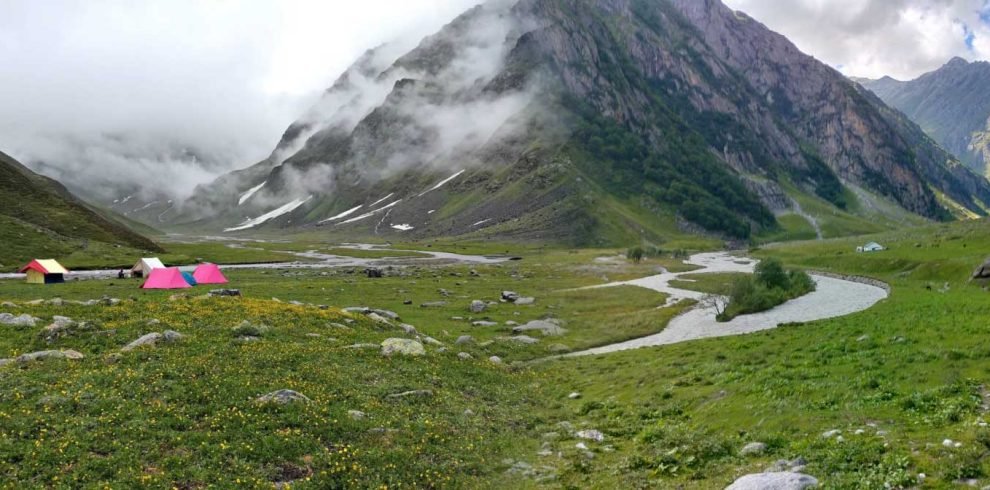
Har Ki Dun trek takes you through some of the most charismatic alpine meadows and pine forests which is a treat to the eyes. During winters the snow-covered trails of Har Ki Dun Trek look mesmerizing as and when the sun tries to peep behind the clouds. One of the oldest Treks in Himalayas, known as the Valley of Gods, some believe Har ki dun is the same route taken by the Pandavas in the Mahabharata on their ascent to heaven. Swargarohini—the snow peak, the vision of which dominates the Har Ki Dun Trek bears a legacy of the mythical stairway to heaven and this trek gives you a true experience of trekking in Uttarakhand, the land of Gods.
Along the trek, you will get to see epic views of Swargarohini I & II peaks. Legends believe that the Pandavas took this route to ascend to the heavens via the Swargarohini peaks. The Har Ki Dun Trek mythological connection adds quite a bit of intrigue to the trek. Apart from that you can also witness the Hata Peak gracing the skyline, creating a lovely backdrop. The majestic Jaundhar Glacier lies just 13 km ahead of the Har Ki Dun Valley and can be sighted from the Har Ki Dun Valley. This glacier is one of the major contributors to the Tons River.
Other attractions in Har Ki Dun Trek include the temple at Osla which is dedicated to Duryodhana, built by the inhabitants of Saur. It is about 13km from Taluka which lies on the steep mountain trail to Har Ki Dun. It is a 5,000-year formation of wooden chambers that are carved elegantly.
The challenge of Har Ki Dun, besides the long hours of trekking for 6 long hours is fighting with frequent rain. The peak time of the year for Har ki Dun Trek is not winter after a snowfall but in summer frequented by rain. Proceeding through green foliage dripping with pearls of rain is a beautiful experience of trekking in India but trekkers must be well-equipped for it. Rain trekking essentials like a poncho, waterproof covers, anti-diarrhoea medicines, and water-resistant trekking boots are a must before going on the Har Ki Dun Trek. Whatever the conditions are, Har Ki Dun surely gives you the vibes of visiting a wonderland.
Along your Har Ki Dun Trek, you will pass through some of the most remote villages in the country like Taluka, Gangar, and Osla giving you the best experience of treks in Uttarakhand. You get to experience the unique lifestyle and traditions in these mountain villages. The people in the villages are warm and friendly as well. Har Ki Dun Trek Valley is a grazing ground for cattle and when it is not snowy, the shepherds bring their livestock to graze in the meadows of Har Ki Dun.
The Har Ki Dun Trek starts at the village of Sankri and our team will meet you at Dehradun for pickup you will be driven to Sankri where we will check in at a guesthouse. The trek to Har Ki Dun Trek starts the next day as we trek from Sankri to Osla Village via Dhatmeer. En route Har Ki Dun Trek, you may encounter wild orchids and if you are really lucky, you may spot animals like barking deer, leopards, bores, and much more. The Himalayan Monal, the state bird of Uttarakhand can also be spotted in the forests of the Har ki Dun Trek. We will also cross the Tons River on the way. From Osla Village, we will embark on towards Seematra via Kalkattiyadhar. Most of the trek to Har Ki Dun is through thickets of conifers and you will encounter the Supin River. Osla is located on the other side of the river and crossing the river, you will arrive at Seematra. The next day we will start our summit towards Har Ki Dun and return to Seematra covering a distance of 14 km. Descending to Pauni Garaat the next day we will rest the night and head towards Sankri via Taluka ending our days of trekking in Uttarakhand. Stay the night at Sankri, explore the village and the local market, and head back to Dehradun the next day, ending the Har Ki Dun Trek.
Har Ki Dun Trek is graded as an easy to moderate trek and takes you along one of the most ancient trek routes and isolated civilizations high up in the Himalayas. From December to March, you can expect snow on the Har Ki Dun trail while in April, the snow starts to melt letting the greenery sprout and come to life. While Har Ki Dun is an easy grade trek the distance covered is relatively more than other easy grade treks and as such the trekker needs to be physically fit. The Har Ki Dun trail can be difficult to find at times but there is no worry, our team of mountaineering-certified trek leaders and guides know the route well and ensure that you do not meander off from the trail.
Expect to see diverse flora and fauna on the Har Ki Dun trek and an abundance of natural beauty and quaint Himalayan villages, where you can observe their lifestyle in such remote areas. You will walk by the beautiful Supin River and come across a couple of river crossings, a beautiful journey of trekking in India. Major peak views include the Swargrohini group of peaks, Black Peak, Hata Peak, and Bandarpoonch.
It is recommended to carry enough warm clothes and the right shoes for the Har Ki Dun trek. The temperature at high altitudes can change drastically and as such being prepared with the right gear is a must. We like maintaining the ecological balance of the mountains and as such we do not condone the use of plastic bags or any other plastic items that can litter the mountain. Mountaineering certified trek leaders and guides are available for more information and personal attention whenever necessary. Safety is our topmost priority.
The best things about Har Ki Dun is that it can be done in any season. Each season presents a unique beauty of the trail.
Weather: This period offers moderate temperatures, making the trekking experience comfortable. Daytime temperatures range from 10°C to 15°C, while nighttime can drop to around 2°C to 5°C.
The Har Ki Dun trek is considered a moderate trek, making it accessible for trekkers with some experience and reasonable physical fitness.

Write Your Review